
“It is astonishing just how much of what we are can be tied to the bed we wake up in in the morning and it is astonishing how fragile that can be.”
Characterised by the frightening and the uncanny, the gothic does not immediately stand out as an appealing genre for children. Nevertheless, the popularity of works such as Coraline, A Series of Unfortunate Events, and Miss Peregrine’s Home for Peculiar Children is unquestionably clear, all earning their own very successful TV/ film adaptations.
I have spoken to many about their vivid, and a little traumatic, memories of reading or watching Coraline as a child. Buttons sewn into the eyes of children, moving dolls, a dark parallel world with grotesque, uncanny characters: these are hardly typical of a children’s moralising fairy tale. However, perhaps Gaiman’s use of gothic is the perfect instrument for painting Coraline’s struggles with moving, family conflict, growing up and self-knowledge.
Gaiman presents adolescent identity as at once fragile and defiant. Coraline’s identity is constantly challenged by the characters she meets: “I asked you not to call me Caroline. It’s Coraline.” Her over-reliance on her name as an assertion of self-knowledge and identity is overturned by Gaiman’s emphasis on the fluidity of identity. The anxiety that identity is “tied to the bed we wake up in” reflects the impact of Coraline’s move. Her sense of displacement at the Pink Palace Apartments, having left family and friends behind, is heightened by this crisis of naming. She wonders if when she wakes up in a different bed - whether in a different house or in a different reality - she remains the same person. Coraline wishes to be seen and understood, by her parents, but also by herself. This makes the other mother’s offer of a simple existence, a perfect illusion, even more tempting.
“‘No,’ said the cat. ‘Now you people have names. That’s because you don’t know who you are. We know who we are, so we don’t need names.’”
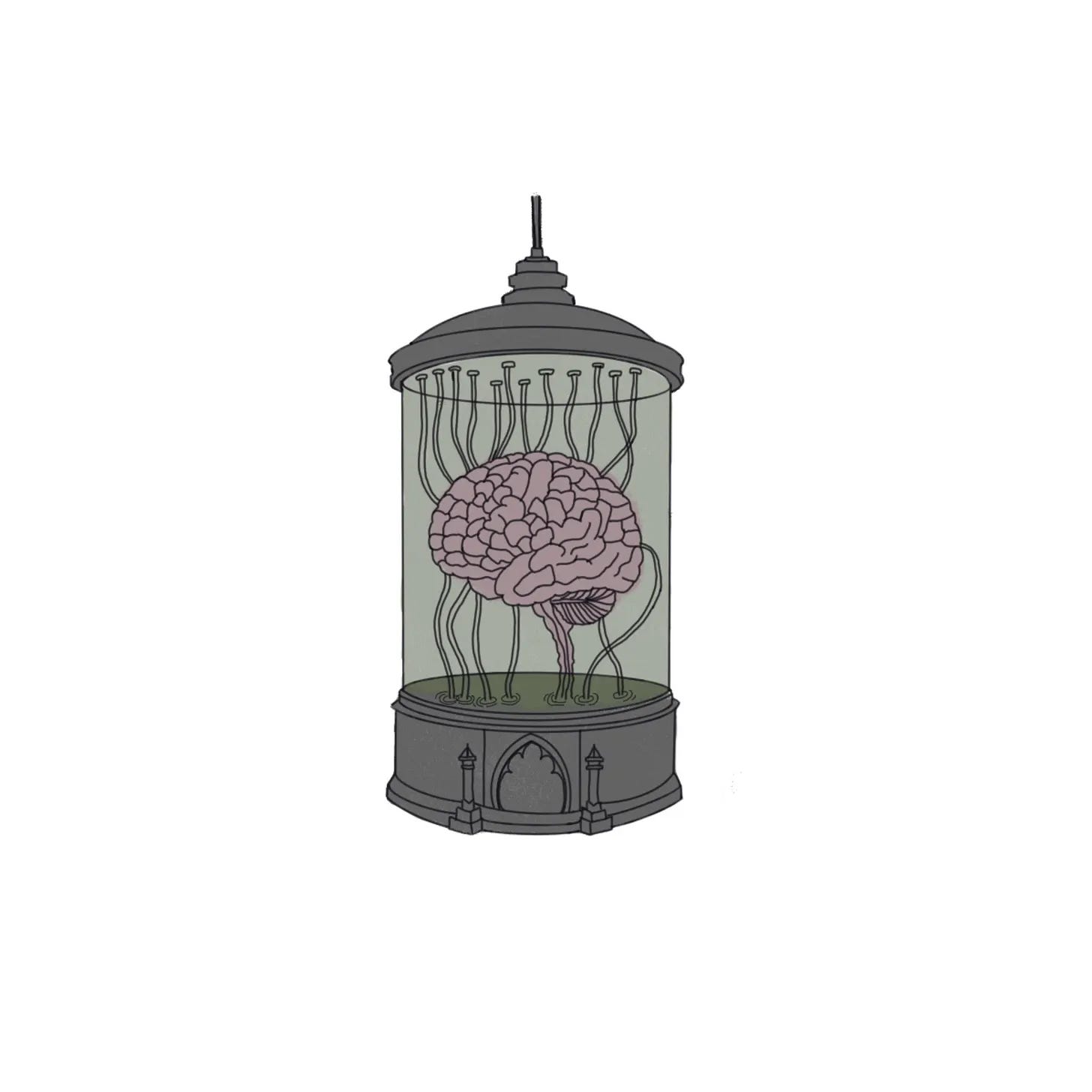
Gaiman’s use of the sarcastic, wizened voice of the cat here satirises the dynamic of human and pet while striking a truthful stab at human identity. Why then, does Coraline choose to fight for her flawed, real life, rather than accept the other mother’s perfect illusion? The answer can be compared to Robert Nozick’s famous thought experiment, The Experience Machine as detailed in Anarchy, State, and Utopia. The dilemma asks you to consider whether if you were offered the opportunity to plug into an experience machine, allowing you to live the rest of your life in a perfect simulation where you can do and achieve anything, would you take it. This is, in many ways, the offer that is made to Coraline. The other mother can spin a perfect reality that is free from the uncertainties and struggles of identity.
For all our struggles with identity, self-knowledge and belonging, Coraline demonstrates that this is a dilemma that most of us would not take. As stated by the cat, these struggles are implicitly human, and such humanity and authenticity are, for most, not tradable, even for the chance of a perfect simulated reality. In this sense, Gaiman uses gothic tendencies to do more than just frighten children or provide shock factor. By contrasting the uncanny distortions with the mundane reality Coraline ultimately chooses, Gaiman emphasises the importance of imperfection. Coraline emerges from the uncanny, gothic other world ready to embrace her real, imperfect life. Through this, mundane reality itself becomes extraordinary: “The sky had never seemed so sky, the world had never seemed so world ... Nothing, she thought, had ever been so interesting.”